Language


Organizing first aid supplies for a 72-hour emergency requires more than putting medical items into a bag. Supplies should be grouped by purpose, easy to identify, and accessible when needed. In this article, we explain how to organize a 520-piece emergency first aid kit, covering wound care, protective equipment, lighting, survival tools, and portable storage. We also introduce how Kebon supports customized first aid kits for home, vehicle, and outdoor emergency preparedness.
When preparing for a 72-hour emergency, I believe the organization of supplies deserves as much attention as the items themselves. A first aid kit may contain plenty of medical products and survival tools, but if everything is mixed together, finding a bandage, antiseptic wipe, or flashlight can take longer than expected.
For a practical emergency setup, I recommend separating supplies according to their functions. Wound care products should be easy to reach, protective equipment should be kept together, and survival tools should have their own storage sections. This arrangement makes daily checks easier and helps users identify missing or depleted items.
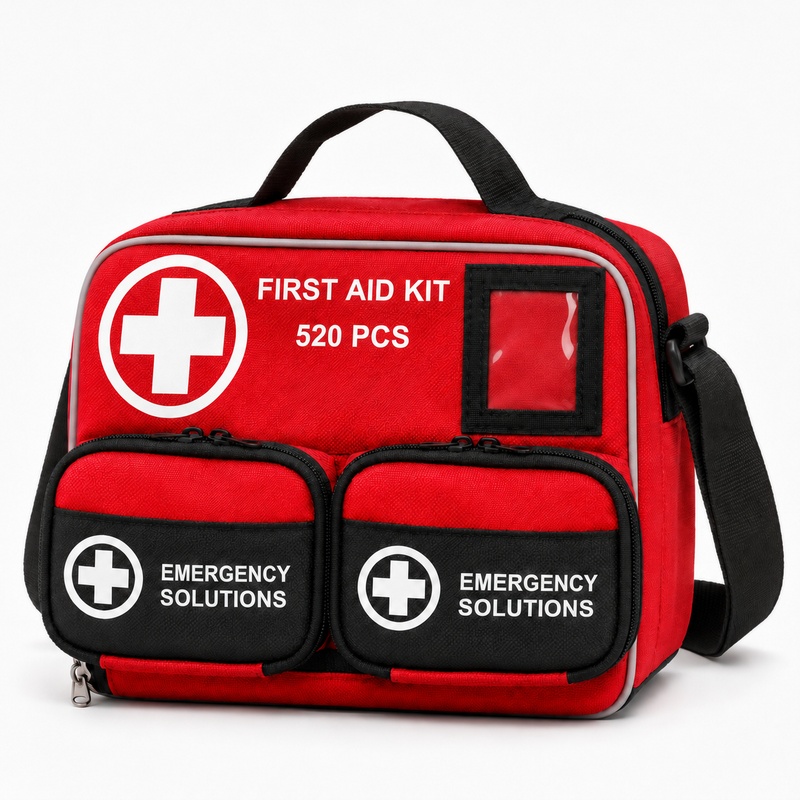
A well-organized Kebon emergency first aid kit combines medical supplies with practical outdoor tools in one portable bag. The 520-piece model is designed for home, vehicle, camping, and outdoor preparedness, making it a useful option for people who want several categories of emergency equipment in one package.
We recommend dividing emergency supplies into several functional groups before arranging them inside the bag. This approach avoids mixing small medical items with larger survival equipment and makes it easier to check the contents after use.
These are the items users are likely to reach for first when dealing with minor cuts, scrapes, or dressing needs. Keep adhesive bandages, gauze pads, medical tape, and bandages together so they can be located without opening every compartment.
For example, Kebon's 520-piece first aid kit includes standard adhesive bandages measuring 72 × 19 mm, 5 × 5 cm gauze pads, adhesive tape measuring 1.25 cm × 5 yards, and PBT bandages measuring 5 cm × 4.5 m. These different sizes support a range of basic dressing and wrapping applications.
Alcohol pads, antiseptic cleansing wipes, PVC gloves, and tweezers should be stored in a separate section. Keeping these products together helps users find cleaning and protective items quickly before handling a wound.
We also suggest checking the packaging condition and expiration dates of applicable medical supplies during routine inspections. Any opened, damaged, or expired items should be replaced according to their product instructions.
Emergency situations may occur at night or in places with limited lighting. A flashlight, light sticks, and whistle should therefore be easy to access rather than buried underneath medical supplies.
The Kebon 520-piece kit includes a flashlight rated at 350 lumens, two 6-inch light sticks, and a whistle measuring 1 × 47 mm. These accessories provide practical lighting and signaling options for camping, vehicle emergencies, and outdoor activities.
For outdoor preparedness, a first aid kit may also include tools for basic field use. Items such as a fire starter, compass, paracord bracelet, folding shovel, and emergency blanket serve different purposes from conventional medical supplies.
We recommend keeping these tools in a dedicated compartment or detachable pouch. This prevents heavier equipment from pressing against smaller medical products and makes it easier to check the tool inventory separately.
After sorting supplies by function, the next step is arranging them inside the bag. The layout should consider how frequently an item is used, its size, and whether it needs protection from contact with other equipment.
Kebon's 520-piece emergency first aid bag measures 28 × 20 × 14 cm and is made from 600D Oxford cloth. Its main compartment, two detachable front pouches, and fold-out interior organizers provide separate storage areas for different categories of supplies.
| Storage Area | Recommended Items | Organization Purpose |
|---|---|---|
| Main Compartment | Bandages, gauze pads, emergency blanket, larger equipment | Stores the main supply inventory |
| Detachable Front Pouch 1 | Adhesive bandages, alcohol pads, cleansing wipes | Provides convenient access to frequently used first aid items |
| Detachable Front Pouch 2 | Gloves, scissors, tweezers, small accessories | Keeps protective and handling tools together |
| Fold-Out Interior Organizers | Flashlight, whistle, compass, fire starter, survival tools | Separates outdoor equipment for easier identification |
We also pay attention to how the bag is carried. This model has a top carry handle and a shoulder strap, while its buckle can be attached to a belt or backpack. These details are useful when moving between a vehicle, campsite, or outdoor location.
One practical suggestion is to keep frequently needed supplies in the most accessible sections and return each item to its original position after use. A consistent storage arrangement is more useful than simply filling every available space.
Our First Aid Support for Your 72-Hour Emergency Plan is designed to combine basic medical supplies and outdoor survival accessories in one portable package. Instead of carrying several separate bags, users can organize different emergency essentials within a single storage system.
The following table outlines the main specifications and representative contents of this model.
| Specification | Details |
|---|---|
| Model | KB1027 |
| Product Type | 520-Piece First Aid and Emergency Survival Kit |
| Bag Size | 28 × 20 × 14 cm |
| Bag Material | 600D Oxford Cloth |
| Available Colors | Black and Red; Customization Available |
| Storage Design | Main Compartment, Two Detachable Front Pouches, Fold-Out Organizers |
| Carrying Options | Top Handle, Shoulder Strap, Attachment Buckle |
| Flashlight | 350 Lumens, 92 mm, 40 g |
| Emergency Blanket | 130 × 210 cm |
| Emergency Poncho | 50 × 80 Inches, 35 g |
| Sample Preparation | Approximately 5 Days |
| Production Lead Time | Approximately 20–35 Days |
| Customization | Logo Printing, Bag Color, Shape, Structure, and Contents |
Some representative items in the kit include:
The exact contents and quantities can be adjusted according to the destination market and intended application. For medical products, users should follow the relevant product instructions and local requirements.
Organizing a first aid kit is not a one-time task. Supplies may be used, damaged, or become unsuitable for use during storage. We recommend checking the kit regularly, especially before a camping trip, long-distance drive, or outdoor activity.
| Inspection Item | What to Check | Recommended Action |
|---|---|---|
| Medical Supplies | Packaging, expiration dates, and remaining quantities | Replace expired, damaged, or used items |
| Cleaning Products | Individual packaging and product condition | Replace opened or damaged packages |
| Lighting Equipment | Flashlight operation and battery condition | Test the flashlight and replace batteries when necessary |
| Survival Tools | Tool condition and completeness | Confirm that all accessories are present and usable |
| Storage Bag | Zippers, buckles, straps, and compartment condition | Repair or replace damaged components |
After every use, we suggest returning supplies to their assigned compartments and recording anything that needs replenishment. This simple habit helps prevent a common problem: opening an emergency kit and discovering that an important item has already been used.
Not every emergency kit needs the same configuration. A household kit, vehicle first aid kit, and outdoor survival kit may have different storage requirements and product combinations. When developing a kit for a particular market, we recommend considering the end-use scenario before deciding on the contents and bag structure.
For home use, the priority is keeping medical supplies organized and accessible to family members. A compartment-based bag can help separate wound care products, cleaning supplies, and emergency accessories.
For vehicle applications, portability and storage dimensions are important. A compact bag with clearly separated sections is easier to place in a vehicle storage area and retrieve when needed. Customers can also explore our 3-in-1 Car First Aid Kit for a vehicle-focused configuration.
Outdoor users may need a combination of medical supplies, lighting equipment, weather protection, and practical survival tools. For this application, detachable pouches and attachment buckles provide additional flexibility when carrying equipment during outdoor activities.
At Kebon, we have our own factory in Yiwu, Zhejiang Province, and provide OEM and ODM services for first aid kits. Customers can customize bag designs based on drawings or samples, while our design team can assist with bag development. We also support adjustments to the bag size, shape, structure, logo printing, and kit contents according to market requirements.
For other application-specific configurations, you can also explore our Military Medical First Aid Kit and Tactical Survival Kit.
A practical emergency first aid kit can include adhesive bandages, gauze pads, medical tape, antiseptic wipes, gloves, scissors, and tweezers. Depending on the intended application, it may also include a flashlight, emergency blanket, whistle, poncho, and outdoor survival tools. The exact configuration should reflect the user's needs and local requirements.
This model is supplied as a 520-piece emergency kit, combining medical first aid supplies and outdoor survival accessories. The contents list provides individual item specifications and quantities. The final configuration can be adjusted according to customer requirements and destination market needs.
The bag is made from 600D Oxford cloth and measures 28 × 20 × 14 cm. It features a main compartment, two detachable front pouches, and fold-out interior organizers for separating different categories of supplies.
Yes. Kebon provides OEM and ODM services. Customers can adjust the contents and quantities of first aid supplies according to their target market and application. Bag dimensions, shape, structure, color, and logo printing can also be customized.
For this model, sample preparation usually takes approximately 5 days, while the stated production lead time is around 20–35 days. Actual timing depends on the order quantity, customization requirements, and final product configuration.
Our usual MOQ for first aid kits is 500 pieces. However, we can discuss lower quantities depending on the project. Pricing varies according to order quantity, product configuration, and customization requirements.
Yes. We accept customer drawings and samples for OEM and ODM projects. Our design team can also assist with developing customized bags and adjusting the internal layout to accommodate different medical supplies and emergency accessories.
Organizing first aid supplies properly makes an emergency kit easier to inspect, carry, and use. With its 520-piece configuration, 600D Oxford cloth bag, detachable pouches, and customizable contents, Kebon's First Aid Support for Your 72-Hour Emergency Plan offers a practical starting point for home, vehicle, and outdoor emergency preparedness. Contact Kebon to discuss your first aid kit requirements and OEM/ODM customization options.
-